You set it up. So can they.
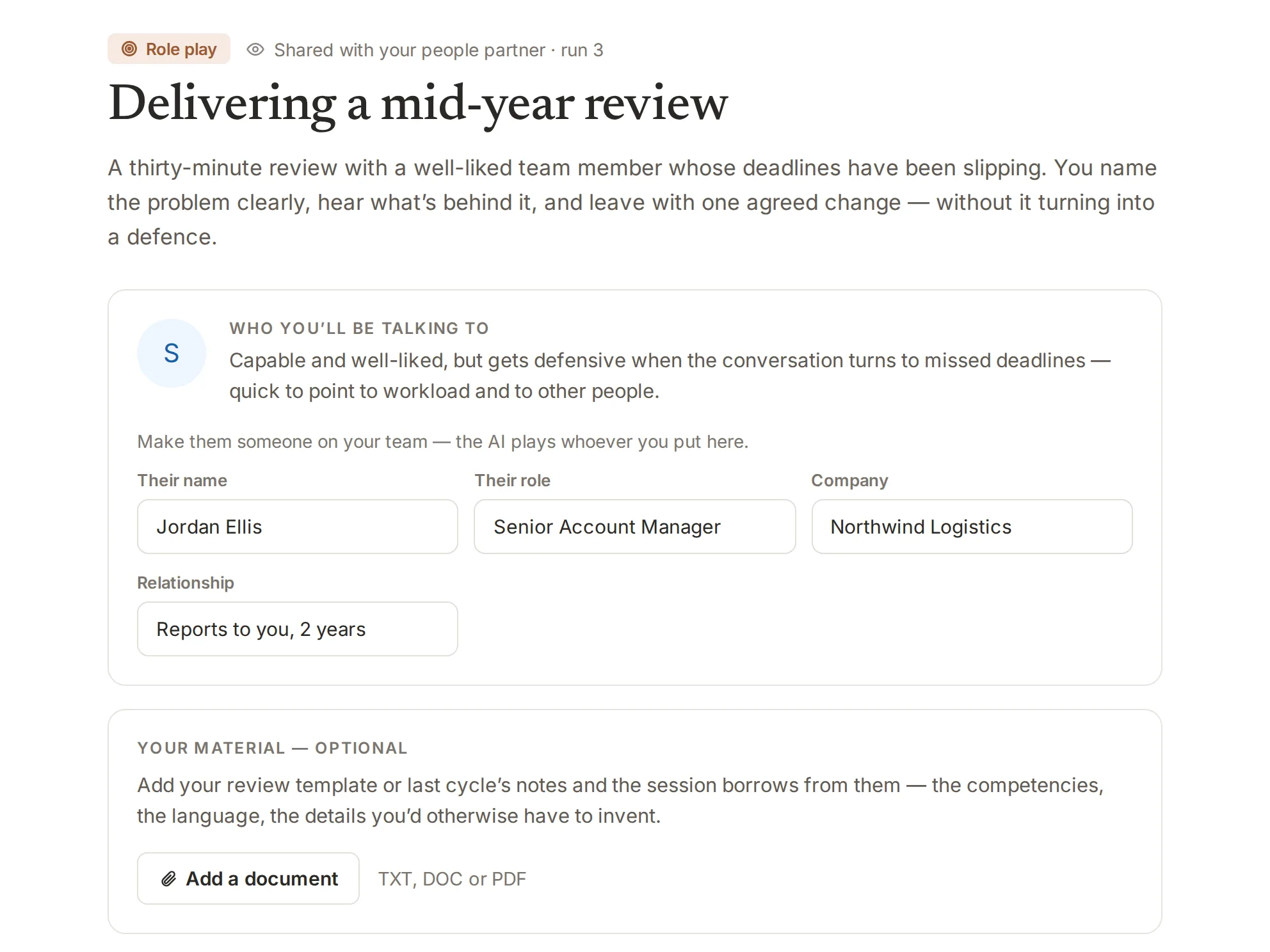
You build tracks for each team from your frameworks and your client’s material, and pick the methodology and feedback format for each. Employees build their own from a document, a template, or a conversation with Sage.
For fractional CHROs and L&D leaders
Sage turns your playbook into practice for everyone at your client: the new hire in week one, the rep before a pricing call, the CS lead before a renewal, the new manager before their first review. You build the system once. Then anyone can bring their own situation and practise it the same day, with feedback in the format you set.

You’ll talk to me, not an SDR. I’ve spent close to thirty years leading teams across the US, Europe and Asia, and I’ve seen how much of a team’s performance comes down to conversations people never get to practise. Tell me the one your clients’ people struggle with most, and I’ll have it built before we meet.Sumanta Chakraborty · Founder & CEO, nSpire AI
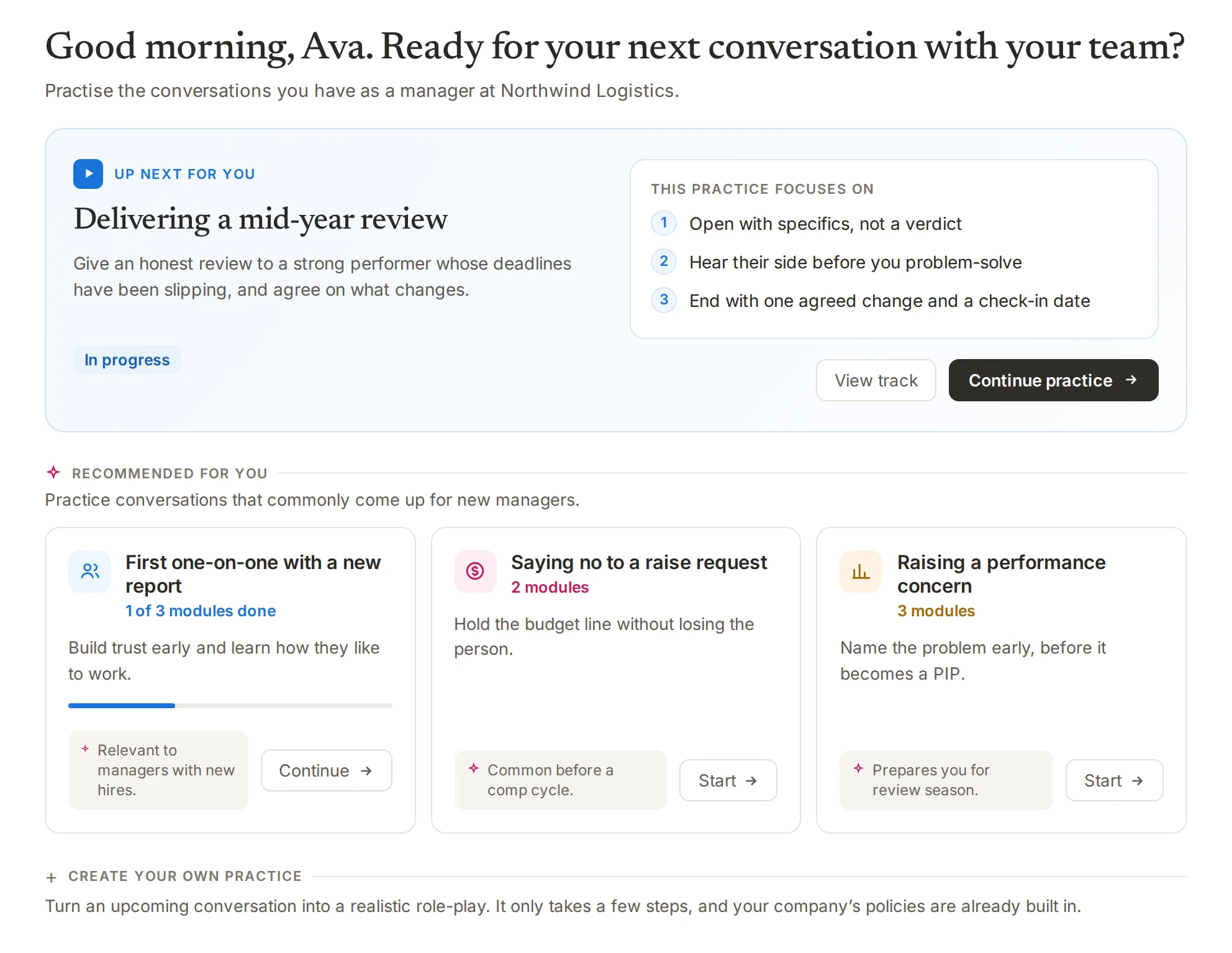
Everyone’s practice, queued up for the week.
How they practise
The way they’ll have the real conversation. Ten minutes, the night before or the morning of.
After every session
Against the methodology you choose, in the feedback format you set.
Setup
Built from your playbooks and your client’s handbook and policies. Then reused for your next client.
Comp, policy, employee relations, hiring, and every person who needs coaching to do their best work. Sage handles the practice, so your hours go to the work only you can do.
You set up tracks for onboarding, sales, customer success and new leaders. Then the rep builds a practice for Thursday’s customer, and the CSM for the account up for renewal, from their own notes and data. It’s their real conversation, so they come back.
Who practised, where each team is still weak, and whether the same mistakes stop recurring, across departments, not just HR. Evidence for the renewal, not a completion badge.
Anyone can build
Every employee can build practice for the conversation in front of them, in minutes, and get concrete feedback. You set the standards once. They bring their own situations, so the system keeps working whether or not anyone assigns them a thing.
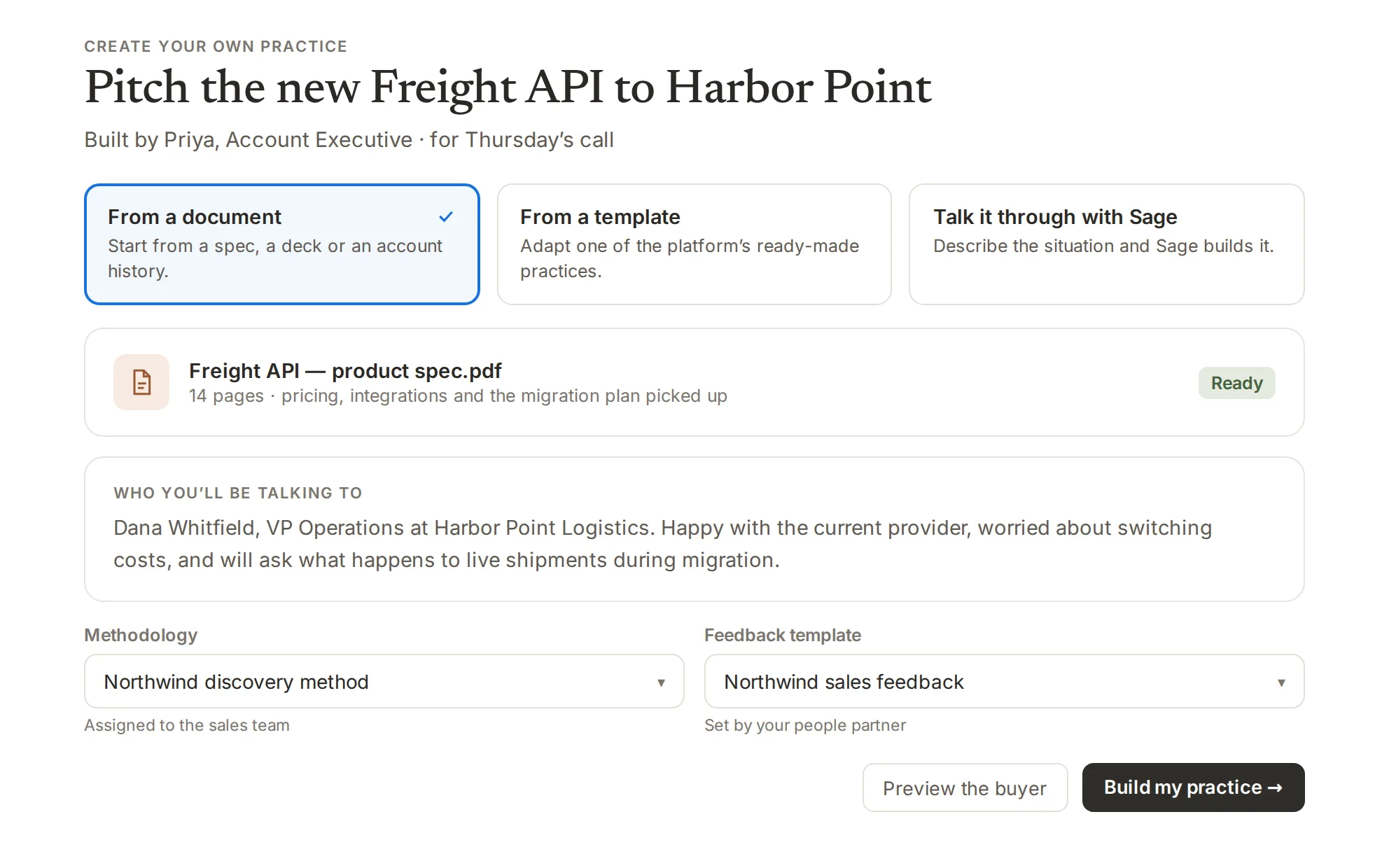
A rep uploads the spec for the product they’re pitching on Thursday and practises against a sceptical buyer.
A new leader takes a ready-made one-on-one practice and adapts it to their team and their company.
A CSM describes the account up for renewal, its history and what’s gone wrong, and Sage builds the customer.
Whatever they build still uses the methodology and feedback template assigned to their team.
Why I reached out
“After close to thirty years of leading teams, I’ve seen how much of a team’s performance rides on conversations nobody rehearses. I’m testing whether practice like this is useful for fractional people leaders and the companies they serve. If it isn’t for you, tap . That helps me as much as a booked call.”
Sumanta Chakraborty · Founder & CEO, nSpire AIWho built it
First-time manager, global team lead, VP, C-suite. Between us we’ve lived each step, and built nSpire around the conversations that come with them.
Founder & CEO
Close to three decades building products and leading teams across the US, Europe and Asia, at Siemens, Sony, LG, NVIDIA and Nuance. MBA, UCLA Anderson.

Co-founder & CTO
About thirty years leading global engineering teams, including as VP of Engineering at FireKing Security Group and in deep learning at Intel. M.Tech in Computer Science, Indian Statistical Institute.

Chief Customer Officer
Has led nSpire’s products and teams from first concept to multi-year enterprise contracts, and co-founded two companies before it. PhD, Cornell University.

Fractional Head of Growth
Former CMO of Harri, with leadership roles at ADP and iCIMS before that. She works with us as a fractional executive, so she knows your side of the table.
How it works
You build tracks for each team from your frameworks and your client’s material, and pick the methodology and feedback format for each. Employees build their own from a document, a template, or a conversation with Sage.
The defensive direct report, the customer threatening to churn, the prospect who says it’s too expensive, the stakeholder a new leader has to win over. Voice or video, ten minutes, any time.
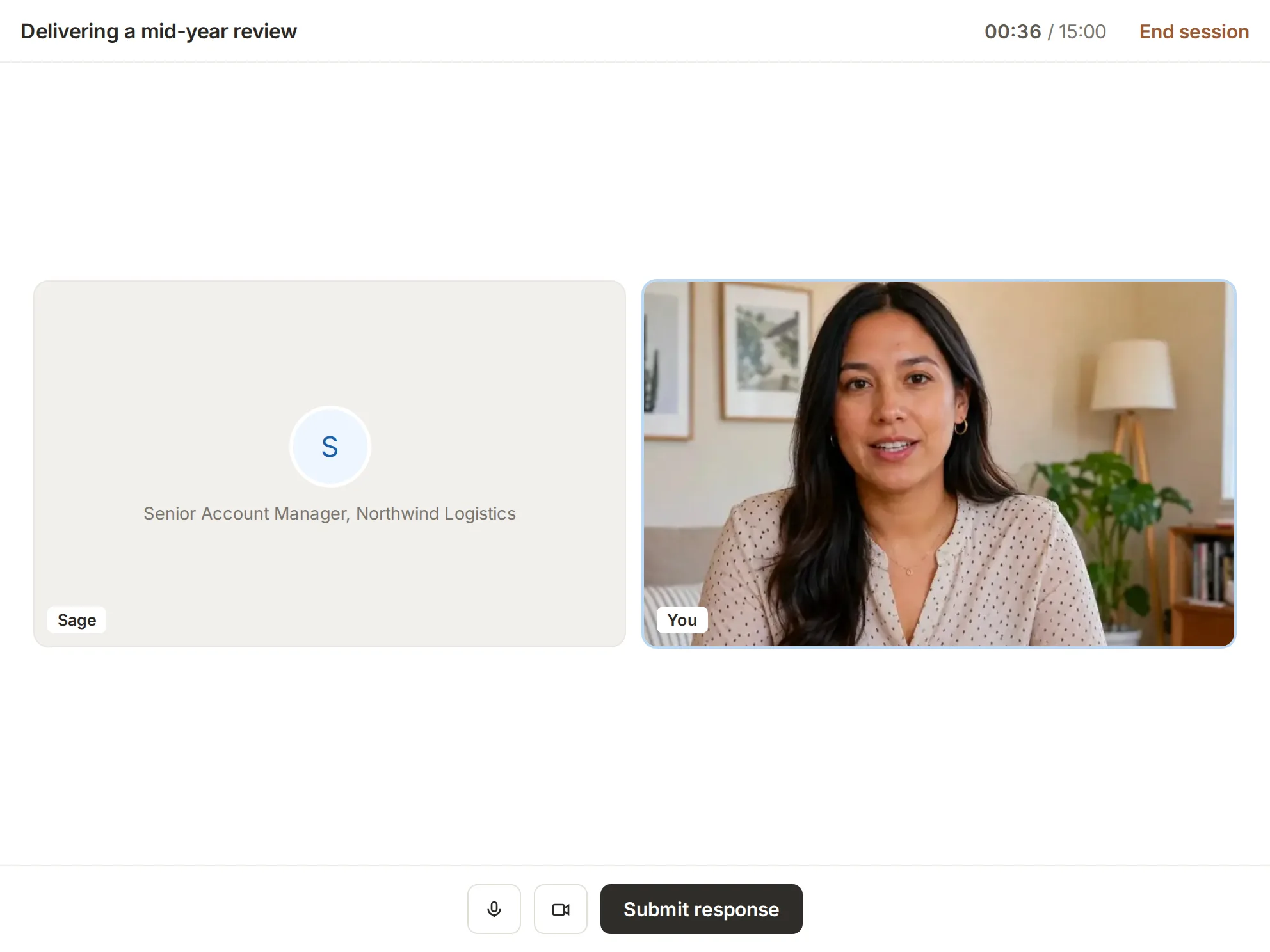
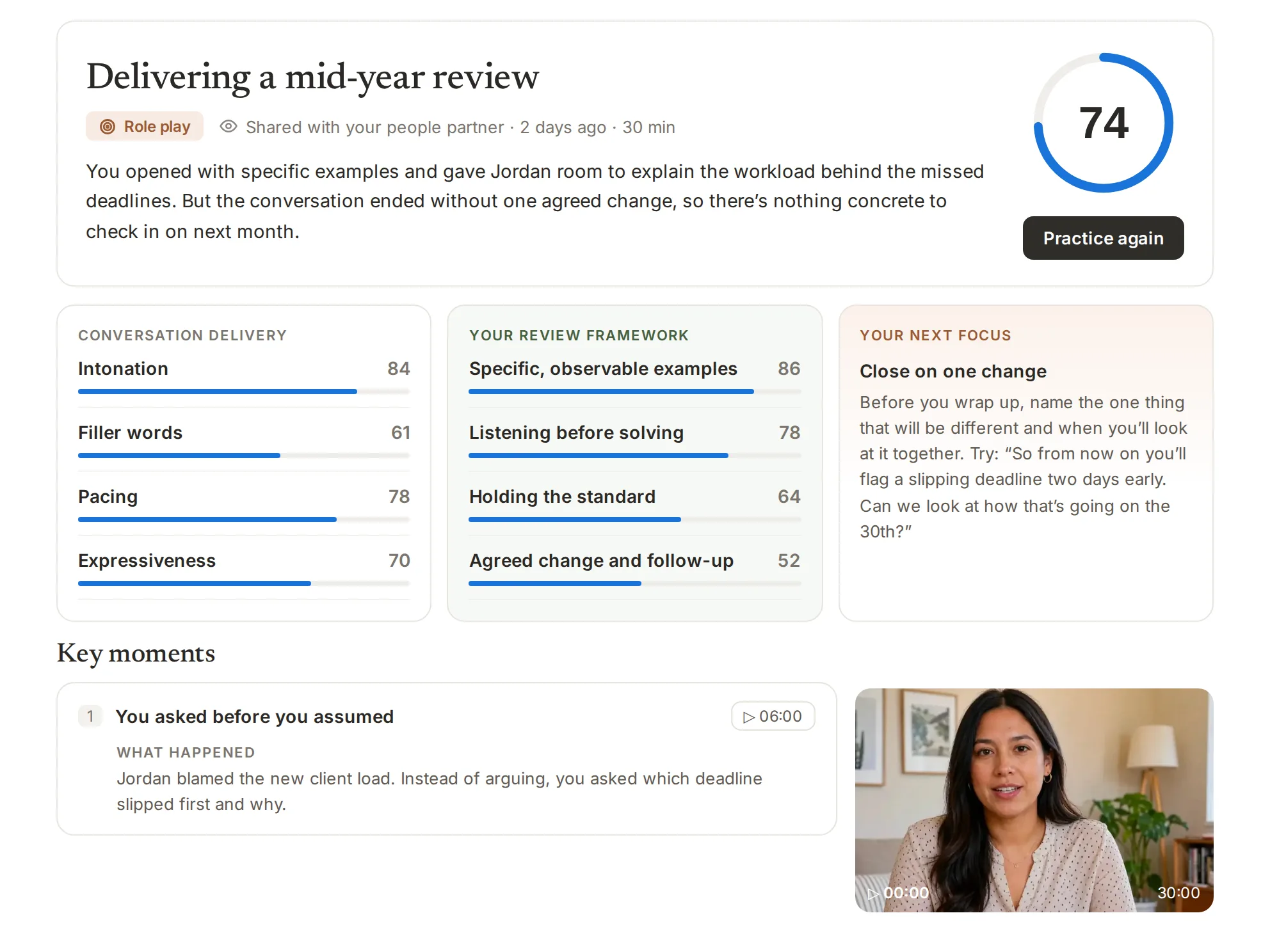
Scored against the methodology you chose, in the format you set. What worked, what to try next time. You see the patterns across every team.
Early access
Fractional people leaders who want to bring something new into their clients, and help shape it while it’s early.
Built with your frameworks, ready to take into a client in 72 hours.
Set with you on the call, and kept as your practice grows.
To the people building it. What you ask for shapes what we build next.
What we ask in return: use it with at least one client, and tell us honestly what works and what doesn’t.
Questions
Seventy-two hours to a first working version for your first client. Not a pilot plan or a statement of work. nSpire’s team builds it with you from your existing material.
New hires and interns in onboarding, sales before discovery and pricing calls, customer success before renewals and escalations, and managers and new leaders before reviews, feedback and one-on-ones. Most people start with whichever team hurts most.
Yes. Your frameworks and scenarios become a library you keep. For each client you add their policies, roles and culture on top, so the second client takes less work than the first.
Yes, three ways. Start from a document, like a product spec or an account’s history. Customise one of the platform’s templates. Or describe the situation to Sage and build it from scratch. They’re practising within minutes.
Yes. Each track and module can carry its own methodology and feedback template. If you want every piece of feedback at a client in one format, that’s a setting, not a project.
No. It’s where your method gets practised between your visits. You design the tracks, the methodology and the feedback format; nSpire runs them on the days you’re not there.
Most practice tools get ignored because the practice is generic. Here people build practice for the conversation they actually have this week: their customer, their renewal, their review. That gives them a reason to come back. Sessions are private by default, which removes most of the rest of the resistance.
ChatGPT will play a customer or a colleague, but it stays agreeable, doesn’t know your client’s products or policies, doesn’t react the way a real person does, and doesn’t score anyone against your methodology. nSpire is built from your method and your client’s material, so the difference is between having a conversation and running a rehearsal.
We’re setting pricing with a small group of founding practitioners now, built for how fractional practices work. Bring your client mix to the call and we’ll work it out together.
Engagement scores and attrition move too late to tell you anything early. Three things move first: who practises without being told, where each team is weak on the same conversation, and whether the same mistake stops recurring. nSpire shows all three from the first fortnight.
No. nSpire does not train models on customer data. Your frameworks, your client’s material, recordings and scores stay theirs and yours.
nSpire is SOC 2, ISO and GDPR compliant. Sessions are private by default, and access is limited to the people you and your client grant it to.
nSpire works with Microsoft, Google, Outlook and HubSpot. If a client needs a connection we don’t already have, we build it into their setup.
Anything else, bring it to the call.
Thirty minutes with SumantaOn the call we take one conversation your client’s people actually struggle with — a new hire’s first customer call, a renewal at risk, a new manager’s first tough review — and put it in front of the AI while you watch. You’ll know inside thirty minutes whether this belongs in your practice.
Pick a time for thirty minutes with me, then answer three quick questions so I can build it before we meet.
Calendar not loading? Open it in a new tab.
Thirty minutes, one conversation, no deck.
SOC 2 · ISO · GDPR